Red & Yellow

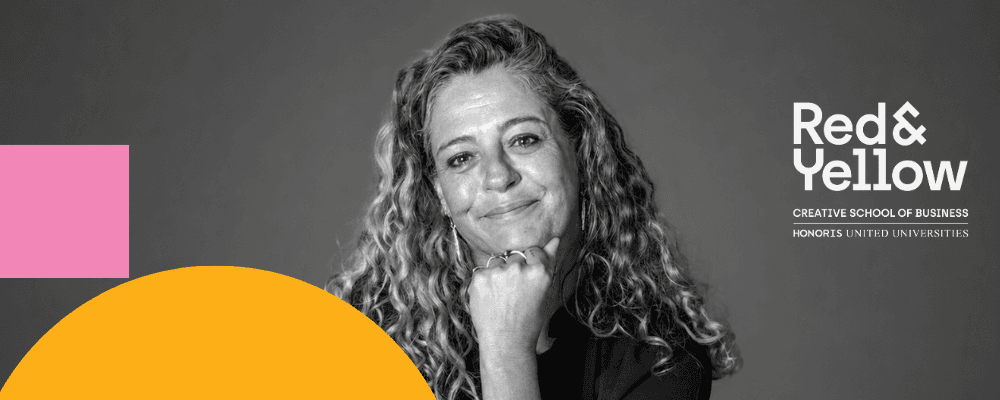
We spoke to Nini van der Walt, a Graphic Design and Digital Design lecturer at Red & Yellow Creative School of Business, about what designers need to know about AI. With decades of experience across publishing, advertising, and education, Nini has seen creative industries evolve through many technological shifts. Her perspective on AI is strikingly positive; it’s not a threat, but a tool. Here’s her take on how designers can embrace AI without losing their unique human edge.
Should We Be Worried About AI?
No! Please do not worry. Look AI straight in the eye and give it a wink.
AI feeds off humans’ intellectual property - not the other way around. Current AI systems are essentially advanced pattern-recognition tools. They don’t have consciousness, awareness, or intention. What they produce is a rearrangement of human-created material - words, images, films, and designs - into new structures.
Humans remain the source. We generate the ideas, culture, and aesthetics that AI learns from. If AI ever began feeding primarily itself, its quality would degrade quickly, and people would notice. In fact, many creatives are already tired of bland, generic AI outputs. That’s why design trends are swinging back toward raw, imperfect, and sentimental aesthetics. Imperfections are cool again.
AI is powerful, but it’s still just a tool. We’re not being replaced - we’re working with a new instrument.
Five Things Designers Should Consider in the Age of AI
1. Stay One Step Ahead
AI will only steal your job if you surrender it. The trick is to keep your finger on the pulse. Follow Instagram accounts, save folders on Pinterest and Behance, listen to podcasts, and watch TEDx talks. Stalk about the technology a little - know what it’s doing before it knows what you’re doing.
Curiosity is now part of the job description. Read, research, and question everything. The one thing that will catch you out is the thing you didn’t know was happening.
Think of it like past shifts: cars didn’t replace bicycles; Photoshop didn’t replace hand-drawn illustrations. They simply expanded the toolkit. AI is the same.
2. Stop Being a Designer. Start Being a Visual Communicator.
AI’s superpower is speedy. It can generate designs in seconds, but they often feel predictable and cliché. That’s because AI recombines patterns from existing work. It rearranges the past; it rarely invents something truly new.
Don’t compete with AI on speed - you’ll lose. Instead, you need to slow down and design thoughtfully. Aim for conceptual and impactful work. The things AI cannot replace - judgment, nuance, empathy, and storytelling - are the things that matter most.
Think bigger: become an AI director, a brand architect, and a narrative builder. Human-centered design, rooted in empathy and real user needs, is where iconic work comes from!
3. Use AI as Your Personal Assistant
Clients rarely know exactly what they want. More often, they know what they don’t want. That’s where designers step in - interpreting, reading between the lines, and translating vague briefs into meaningful solutions.
AI can help here. It can analyze briefs, highlight gaps, and generate rough scamps to test with clients early on. This speeds up alignment and reduces back-and-forth. But the soul of the work - empathy, the context, the final craft - remains human.
AI saves time, but the invoice stays the same. The value lies in your thinking, not just execution.
4. Learn to Prompt Properly
Prompting is your secret superpower. AI doesn’t know your intentions - it only knows what you say about it. Vague prompts lead to biased, generic outputs.
Be precise. Specify subject, action, environment, style, and mood. For example: “A cyberpunk samurai standing on a rainy, neon-lit rooftop in Cape Town, in a hyper-realistic digital painting style, with moody cinematic lighting and deep shadows.”
The better your prompt, the better your output. AI won’t guess - you have to tell it exactly what you want.
5. Keep Learning New Platforms
AI platforms evolve fast. What was cutting-edge last year is old news today. Even Adobe apps update constantly, integrating clever AI features. Stay curious, refine your prompts, and don’t get lazy.
Often, refining AI results takes longer than creating something from scratch - which is why many designers use AI as a starting point, then rebuild the final work themselves. That balance between AI-generated ideas and human craft is where magic happens.
And here’s a fun hack: ask AI which newer, better platforms exist. It will happily point you to competitors. Use that “stupidity” to your advantage.
Final Thoughts
AI is not here to replace designers. It’s here to challenge us to think bigger, stay curious, and design with more empathy and intention. The creatives who thrive will be those who embrace AI as a tool, not a threat - using it to sharpen their storytelling, deepen their research, and expand their visual communication.
Sit back, buckle up, and enjoy the ride.